Squid Game Celebration
Unlaunched Confirmed 10,207 views

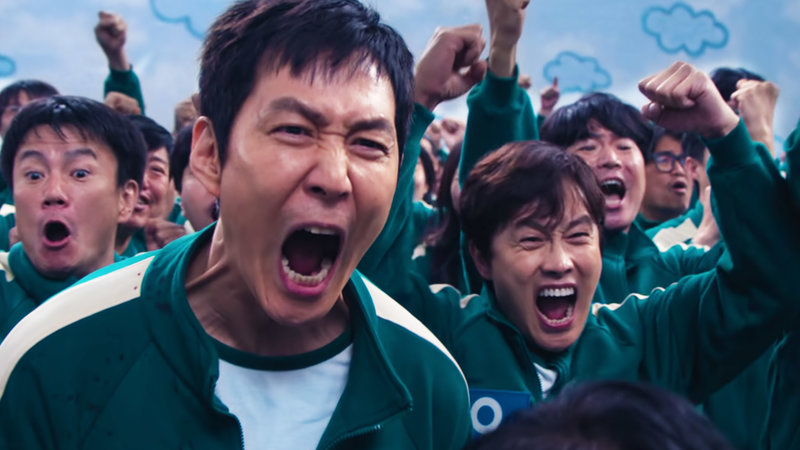
Squid Game Celebration
Unlaunched. [Launch This Meme] [View All Unlaunched]
Memecoin
- Name
- Squid Game Celebration
- Image
- the meme's own image, fixed
- Pair
- $MEME, the mother coin. This coin becomes a child of $MEME.
- Rewards
- 1% of every trade of this child coin, paid to its holders in $MEME
- Website
- kym.fun/memes/squid-game-celebration
One signature creates the coin on pump.fun (you pay only pump.fun's creation cost, about 0.02 SOL). With a first buy, a second signature buys it right after. The first launch claims this meme for good.
About
Squid Game Celebration, also known as Squid Game Cheering, refers to a clip from season 2 of the South Korean Netflix show Squid Game in which the protagonist, Seong Gi-hun (Player 456, played by actor Lee Jung-jae), is cheering and celebrating with a group of players during the Six-Legged Pentathlon game in episode 5, titled "One More Game." The scene was used in an image macro series and as a reaction GIF in caption memes on Twitter / X, TikTok and Reddit in 2025, usually to represent a group of people celebrating something with fervor.
Origin
The full history, spread and examples live on the source entry: Squid Game Celebration on Know Your Meme.
The Child Coin
Whoever launches this meme first creates its one official child coin of $MEME. The child coin takes this exact image, is priced in $MEME, and pays 1% of its every trade to its holders, in $MEME. After that, the meme is closed here forever.